
Many clients begin microdosing with the hope that there is a single “right” protocol that guarantees results. They may ask about the perfect schedule, the ideal dose, or how long it should take before they notice a change. Yet experienced practitioners know that microdosing rarely unfolds in a perfectly linear way.
Some clients experience subtle shifts quickly, while others move through emotional resistance, uncertainty, or periods of discomfort before meaningful insight emerges. Supporting clients through this process requires more than simply recommending a protocol. It requires balancing structure with flexibility, maintaining realistic expectations, and creating a safe, trauma-informed container where clients can develop trust in their own experience.
Microdosing Protocols Provide Structure, Not Perfection
Microdosing protocols can offer important stability, especially for clients who are new to the practice. A consistent microdosing schedule may help reduce decision fatigue, support nervous system regulation, and create a sense of grounding during the early stages of the journey.
At the same time, protocols can become limiting when clients treat them as rigid rules rather than supportive frameworks. Many clients assume they are failing if emotional discomfort or uncertainty arises. This is where practitioners play a critical role in reframing the process. Growth often includes both expansion and challenge, and clients benefit from understanding that discomfort does not necessarily mean something is wrong.
Encouraging clients to focus on self-awareness instead of achieving a “perfect” protocol helps build self-trust and creates a more grounded relationship with the microdosing process.
- How do you support clients through the uncertainty, emotional surfacing, and transformation that microdosing can awaken?
- What would change in your practice if you could hold personalized microdosing journeys with greater clarity, safety, and ethical confidence?
- Are you ready to deepen your ability to guide healing work that honors each client’s unique nervous system, trauma history, and path of integration?
Kayse Gehret, a healing artist and founder with nearly three decades in the healing arts, teaches trauma-informed microdosing support.
Ready to support clients through personalized microdosing journeys with great confidence, clarity, and ethical care?
Transform your practice with How To Incorporate Microdosing Into Your Coaching Or Therapy Practice: A Guide To Transformation by Kayse Gehret and deepen your understanding of trauma-informed support, integration, safety, and sustainable client transformation.
Why Personalized Microdosing Matters for Safety and Growth
Personalized microdosing is essential because each client responds differently. Physiology, trauma history, emotional capacity, lifestyle, and nervous system sensitivity all influence how someone experiences a protocol. Even natural variations in mushroom potency can create differences in response, making internal awareness more important than rigid adherence to exact measurements.
For practitioners, this means guiding clients to observe patterns over time rather than searching for immediate certainty. Tracking mood, energy levels, sleep, emotional responses, and relational changes can help clients better understand what supports their growth. Trauma-informed pacing is especially important, as some individuals may need slower and more supported approaches while others integrate experiences more quickly due to previous therapeutic or somatic work.
Meeting clients where they are rather than where a protocol says they “should” be creates a safer and more sustainable experience that supports meaningful transformation.
Integration, Boundaries, and Ethical Support in Microdosing Practice
Effective microdosing support extends beyond dosing days. Integration is where many of the deeper shifts become meaningful and sustainable. Clients should be prepared for a wide range of experiences, including emotional surfacing, increased sensitivity, or periods of uncertainty. Setting these expectations early can help reduce fear and prevent clients from interpreting discomfort as failure.
Safety also includes maintaining awareness around medications, contraindications, and professional boundaries. Practitioners should encourage clients to seek appropriate medical guidance when necessary, particularly regarding pharmaceutical interactions or mental health concerns. Clear communication about the scope of practice protects both practitioner and client while helping maintain trust throughout the process.
Approaching microdosing work with humility and cultural respect is equally important. When framed responsibly, microdosing becomes less about quick fixes and more about supporting deeper self-awareness, healing, and long-term personal growth.
Microdosing protocols can provide valuable structure, but real transformation comes from the client’s lived experience. Practitioners who combine flexible frameworks, personalized support, trauma-informed care, and strong ethical boundaries create the kind of container where lasting change can unfold naturally and safely.
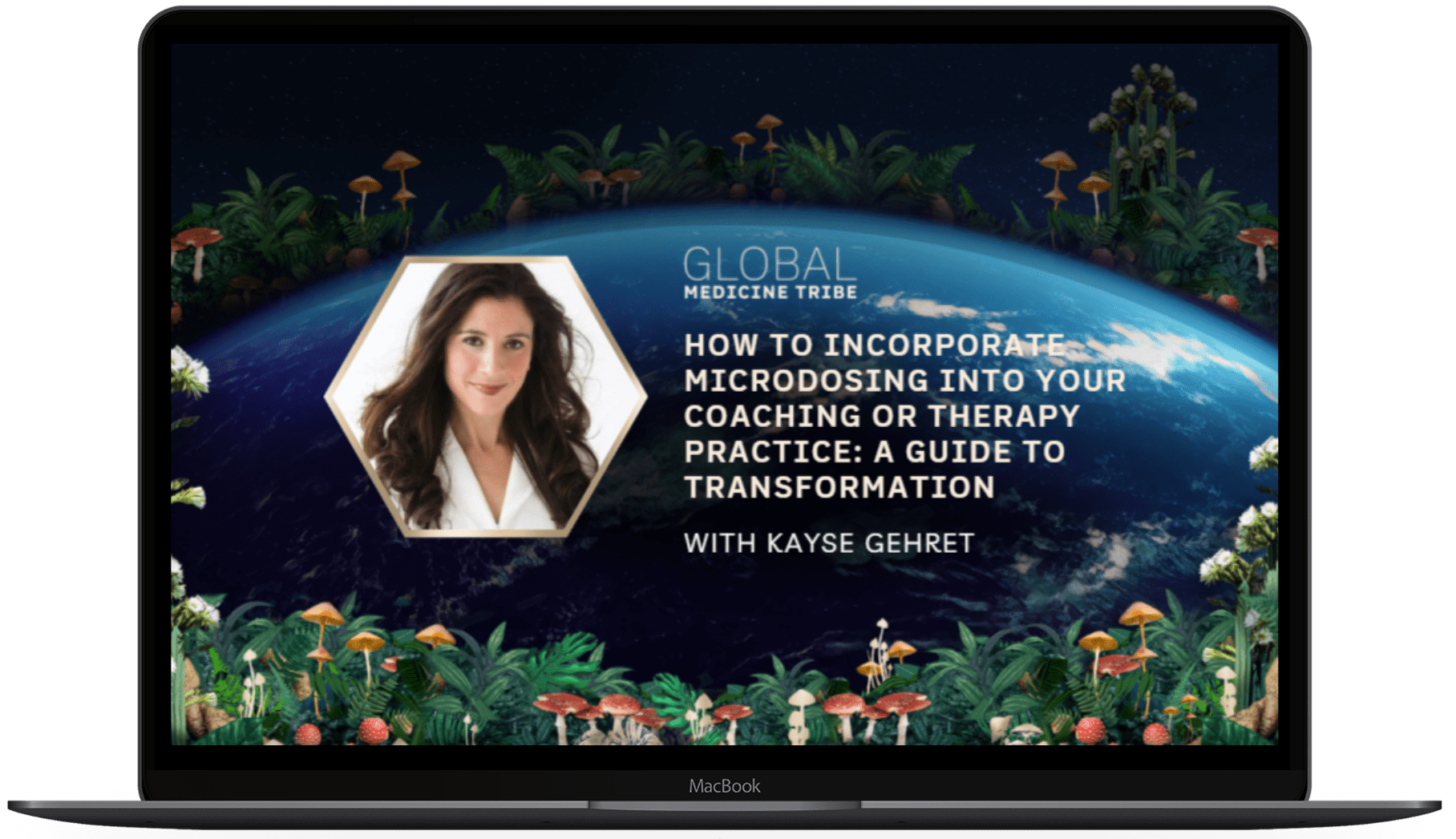
How To Incorporate Microdosing Into Your Coaching Or Therapy Practice: A Guide To Transformation
Support clients with greater confidence, ethical clarity, and trauma-informed awareness through personalized microdosing practices. Learn how to safely integrate microdosing into your coaching or therapy work while creating sustainable transformation for the people you serve.
What You’ll Learn
🌿 Why Become a Microdosing Coach
🌿 Legality & Safety
🌿 How to Incorporate Microdosing into Your Practice
🌿 Overcoming Stigma & Judgment
🌿 Microdosing Protocols & Practices
About the Facilitator
Kayse Gehret is a nature-based healing artist, author, and founder based in Northern California. With nearly three decades of experience in the healing arts, Kayse leads Microdosing for Healing – a nationwide virtual community around earth medicine practice – as well as the Best Practices Healing Community Mastermind – a global collective of diverse healing artists & health professionals brought together for learning, strategy, growth, collaboration, and visioning new healing models for the future.
