
Many people feel called to work with ayahuasca after experiencing profound healing themselves. A ceremony can open doors to emotional insight, spiritual connection, and meaningful personal transformation. After such experiences, it’s natural to wonder how you might support others on a similar path. Yet stepping into roles like ceremony facilitation or psychedelic integration carries important responsibilities. Practitioners must consider not only participant safety, but also how to honor the Indigenous traditions that have protected these medicines for generations. Understanding Indigenous plant medicine traditions provides essential guidance for navigating this path with integrity.
The Cultural Foundations of Indigenous Plant Medicine
Indigenous plant medicine traditions developed through generations of careful observation, community knowledge, and disciplined training. In many Amazonian healing lineages, practitioners spend years learning directly from experienced teachers while following strict dietary and behavioral guidelines that shape both skill and character. This training emphasizes humility, patience, and responsibility toward the people receiving care.
These qualities are essential because plant medicine ceremonies place participants in deeply open and suggestible states. During these experiences, facilitators hold significant influence over the emotional and psychological environment of the ceremony. For aspiring integration coaches and ceremony guides, this cultural foundation offers an important insight: effective facilitation is not about performing rituals or recreating ceremony aesthetics. It is about cultivating the emotional maturity and ethical awareness needed to support people safely through intense inner experiences.
The Risks of Ayahuasca Cultural Appropriation
As ayahuasca spreads beyond its traditional contexts, conversations around Ayahuasca cultural appropriation have become increasingly important. Cultural appropriation often occurs when facilitators adopt the visible elements of ceremony, such as songs, clothing, or ritual objects, without engaging with the deeper knowledge systems that guide their use.
While these ceremonial elements can appear meaningful and authentic, they represent only a small part of traditional healing practices. The real strength of these traditions lies in the mentorship, training, and ethical frameworks that guide practitioners over time. Without these foundations, ceremonies can unintentionally recreate unhealthy power dynamics. Participants in altered states of consciousness often attribute significant authority to facilitators. Without proper preparation or ethical grounding, this trust can lead to confusion, boundary issues, or misinterpretation of powerful experiences.
- Are you a coach, therapist, or ceremony facilitator who feels the responsibility of holding others safely in expanded states of consciousness?
- Have you wondered how to strengthen your ethical grounding and harm-reduction practices when supporting plant medicine ceremonies?
- What would it mean for your work to be guided by clear safety frameworks that protect both participants and the integrity of these traditions?
Workshop facilitator Jerónimo Mazarrasa, ICEERS Social Innovation Coordinator and co-founder of Plantaforma, researches the safe legal integration of ayahuasca practices.
Understand the roots of safe, ethical ayahuasca facilitation before stepping into ceremony leadership?
Step into the learning space of Ayahuasca Ceremony Safety & Harm Reduction with Jerónimo Mazarrasa, and learn practical safety, ethics, and harm-reduction frameworks for responsibly supporting plant medicine ceremonies.
Indigenous Ceremony Ethics and Responsible Facilitation
Indigenous ceremony ethics emphasize responsibility, discipline, and accountability to the community. These principles remain highly relevant in modern psychedelic contexts, where plant medicine work often takes place outside formal regulatory systems. Because the field is still evolving, individuals may sometimes step into facilitation roles without adequate training or experience.
Responsible practitioners approach this work with humility and a commitment to ongoing learning. This includes establishing clear boundaries, carefully screening participants, and staying connected to professional communities that support reflection and accountability. Dialogue with peers helps facilitators refine safety practices and navigate complex situations with greater awareness.
Cultural integrity strengthens the entire field of psychedelic healing. When practitioners approach Indigenous plant medicine with humility, respect, and ethical awareness, they help preserve the traditions that protected these medicines for generations. In doing so, they contribute to a future where ayahuasca work continues to support healing in ways that are responsible, respectful, and deeply aligned with its cultural roots.
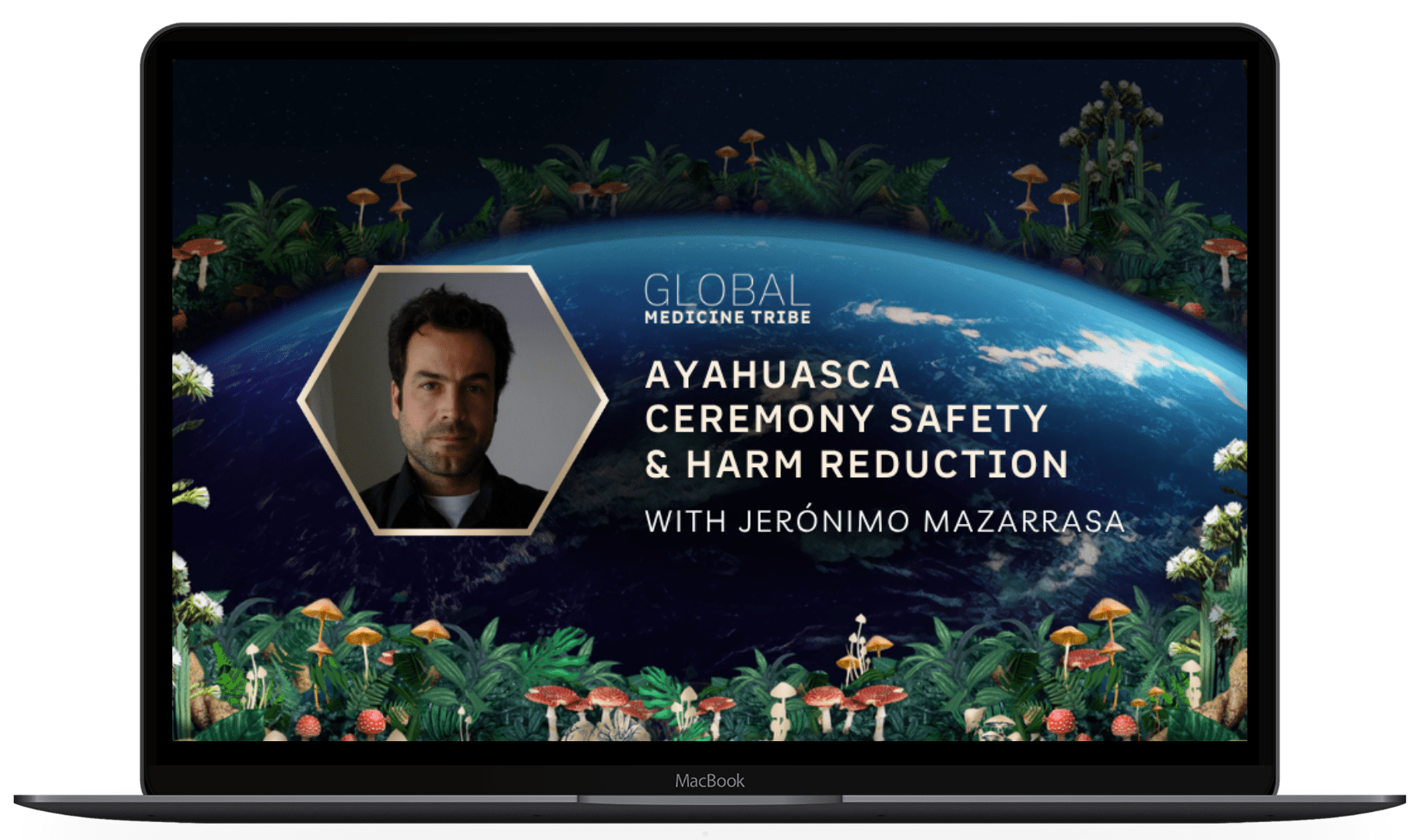
Ayahuasca Ceremony Safety & Harm Reduction
Deepen your knowledge of the issues that arise in plant medicine ceremonies and enhance your skills as a facilitator to guide others through transformational experiences safely. Expert-led training to help you navigate physical, psychological, and legal challenges with clarity and responsibility.
What You’ll Learn
🌿 Best practices for participant safety, recounted through case studies of psychotic breakdowns, runaway journeyers, and challenging visions, so you are prepared to navigate the many challenges that arise in plant medicine ceremonies.
🌿 How to ensure safety as a guide or facilitator, including navigating the traps of intercultural relationships, sex, money, and power dynamics.
🌿How to strengthen your work with validated physical, psychological, and legal security protocols while contributing to a safe, inclusive, and diverse medicine community in right relation to ancestral cultures.
About the Facilitator
Jerónimo is an ayahuasca community activist. He works as the Social Innovation Coordinator for ICEERS and is a founding member of Plantaforma (Platform for the Defense of Ayahuasca in Spain). Over the past five years, he has devoted most of his energy to exploring how ceremonial plant practices can be legally and safely integrated outside of their cultures of origin.
“Enter Quote Here.”
