
For many aspiring and experienced psychedelic practitioners, one of the biggest challenges in integration work is helping clients make sense of powerful experiences in a way that supports lasting transformation. While plant medicine journeys can reveal profound insights, they can also bring forward fear, grief, shame, resistance, or emotional overwhelm.
Internal Family Systems (IFS) offers a valuable framework for understanding these experiences through a lens of compassion rather than pathology. By recognizing that different parts of the psyche serve protective functions, practitioners can support trauma healing, strengthen nervous system regulation, and create safer conditions for psychedelic integration.
Understanding Managers, Firefighters, and Exiles in Psychedelic Integration
Internal Family Systems is based on the understanding that the mind is naturally made up of different parts, each with its own role and purpose. Managers work to prevent pain by maintaining control, planning, and avoiding perceived threats. Firefighters step in when distress becomes overwhelming, often using distraction, avoidance, or impulsive behaviors to reduce discomfort. Exiles are the parts that carry unresolved wounds, painful emotions, and memories that have been pushed out of conscious awareness.
“The firefighters are like in pure service to us. They just come in when we’re, you know, when our parts are starting to have their wobbles.” — Natasha Anand Boojihawon
For plant medicine practitioners, understanding these roles can transform how they interpret client experiences. A client who struggles to surrender during a ceremony may be expressing the concerns of a manager part. A client who suddenly wants to avoid difficult emotions may be influenced by a firefighter. Rather than viewing these responses as obstacles, practitioners can learn to see them as intelligent attempts to create safety.
“I want you just to notice that and acknowledge its presence without trying to push past it.” — Natasha Anand Boojihawon
This shift from judgment to curiosity helps clients develop a more compassionate relationship with their inner world while creating a stronger foundation for trauma-informed care.
How IFS Supports Trauma Healing and Nervous System Regulation
One of the most important contributions of IFS to psychedelic integration is its emphasis on working with protective parts before attempting to access deeper emotional wounds. Many behaviors commonly labeled as resistance are actually survival strategies that helped a person navigate difficult experiences. By respecting these protective strategies rather than trying to push through them, practitioners can create conditions that support sustainable trauma healing.
This approach also supports nervous system regulation, which is essential during both preparation and integration. Psychedelic experiences can intensify emotions and increase access to vulnerable material. The IFS model encourages individuals to develop a witnessing relationship with thoughts, emotions, and sensations rather than becoming overwhelmed by them. This is often described as accessing self-energy, a state characterized by calmness, curiosity, compassion, confidence, courage, creativity, and connectedness.
When clients can remain present with difficult emotions without becoming flooded, they are more likely to integrate insights into meaningful changes in daily life. This helps reduce the risk of retraumatization while supporting greater stability, agency, and resilience throughout the healing process.
- Are you looking for practical ways to support clients when fear, resistance, or emotional overwhelm arise during integration?
- What might become possible if you could recognize and skillfully work with the protective parts that emerge during psychedelic integration?
- How would your practice evolve if you could create safer, more trauma-informed spaces for healing, growth, and self-leadership?
Facilitated by Natasha Anand Boojihawon, a self-mastery guide integrating IFS, psychedelics, somatics, naturopathy, and Himalayan Yog-Vedantic practices.

Ready to deepen your understanding of the parts that shape psychedelic experiences and support safer integration journeys?
Embody the work of Internal Family Systems & Plant Medicine Ceremonies with Natasha Anand Boojihawon and learn how to navigate protective parts, strengthen self-energy, and cultivate trauma-informed presence for yourself and your clients.
Why IFS Makes Practitioners Safer and More Effective Space Holders
While IFS can be transformative for clients, it can be equally valuable for practitioners. Effective psychedelic integration requires more than understanding client experiences. It also requires the ability to remain grounded, self-aware, and present while supporting others through emotionally complex processes.
“When we are present in ourselves, we’re tracking our system, and when we’re present in ourselves, we have the capacity to notice and observe our client’s nervous system, to understand it from a trauma-informed perspective.” — Natasha Anand Boojihawon
The workshop emphasizes the importance of recognizing when a practitioner’s own parts become activated. This awareness helps reduce countertransference and allows practitioners to remain more attuned to their clients’ needs. It also reinforces an important principle of trauma-informed care: understanding the limits of one’s training and making appropriate referrals when deeper trauma work falls outside one’s scope of practice.
By developing their own relationship with self-energy and learning to recognize managers, firefighters, and exiles within themselves, practitioners can create safer containers for healing while modeling the compassion and presence they hope to cultivate in their clients.
Psychedelic integration is ultimately about helping individuals develop a healthier relationship with themselves. Internal Family Systems provides a practical and compassionate framework for understanding resistance, emotional activation, and vulnerability during the integration process. By learning to work skillfully with managers, firefighters, and exiles, practitioners can strengthen trauma-informed care, support meaningful trauma healing, and promote nervous system regulation. As the field of psychedelic practice continues to evolve, these skills remain essential for practitioners committed to ethical, harm-reduction-focused, and client-centered care.
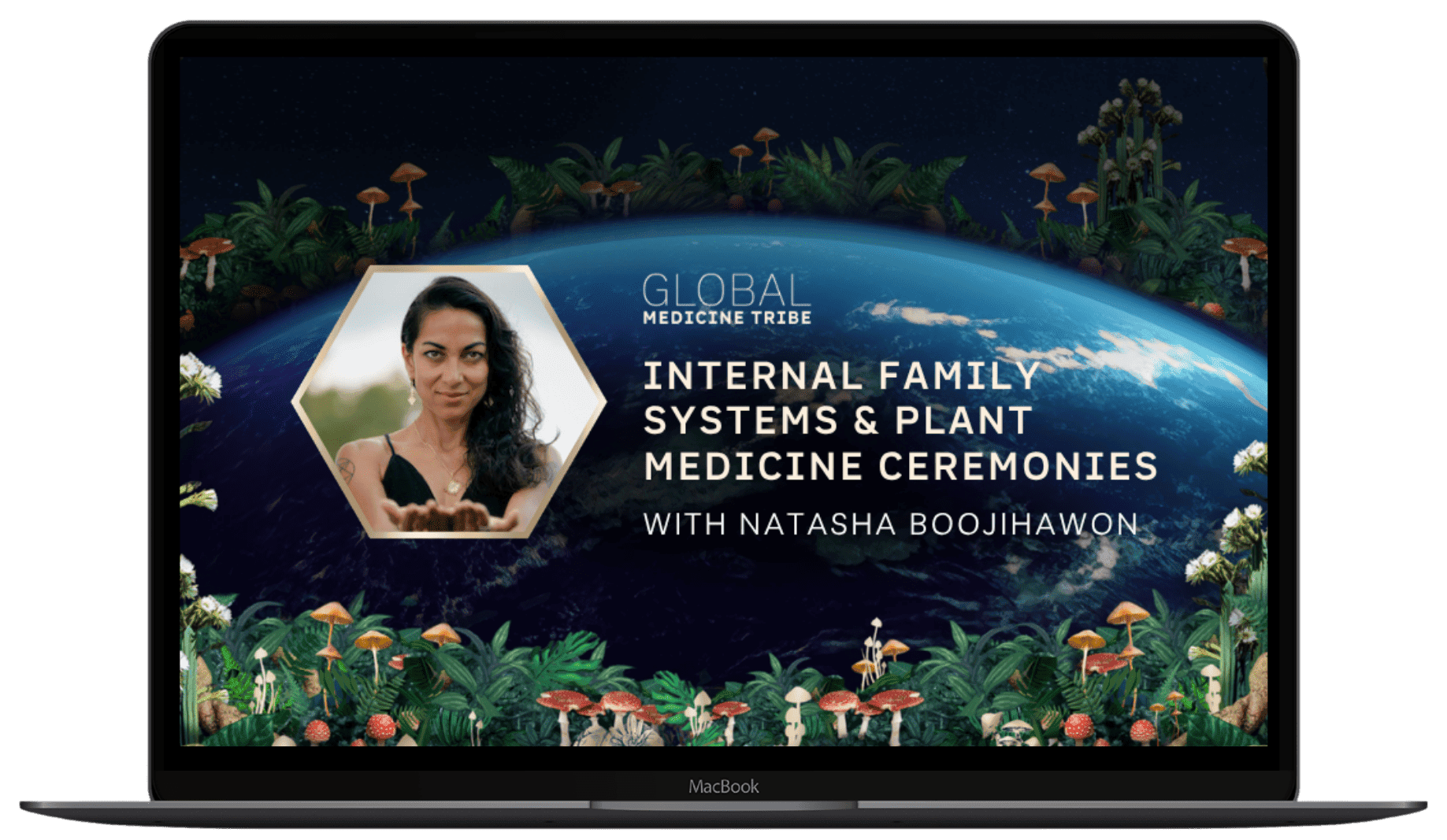
Internal Family Systems & Plant Medicine Ceremonies
Discover how Internal Family Systems and sacred plant medicines can work together to create stability, peace, and radical presence.
Learn practical approaches that can deepen transformation, reduce harm, and support profound integration for yourself and your clients.
What You’ll Learn
🌿 What Internal Family Systems is and how it empowers you to heal the parts of yourself that have become dysregulated, frozen in time, or fragmented
🌿 The magic that happens when you merge IFS with psychedelic and plant medicine work
🌿 How to maintain your position as the navigator and master of your world, even when there are challenging aspects to journey through, both in and out of ceremony
About the Facilitator

Natasha Anand Boojihawon has been on a journey of self-mastery over the last 17 years. Her practice draws on the Himalayan Yog-Vedantic tradition, Internal Family Systems, coaching, naturopathy, psychedelics, bodywork, somatic practices, several energy medicine lineages, and conscious community development.
Her mission is to guide spaceholders on their path of self-mastery through integrative medicine, personal therapy, supervision, and teacher training. She uses a process of evolving the current paradigm of holistic health and wellness education.
